



- Home
- /
- /
- Article
Image
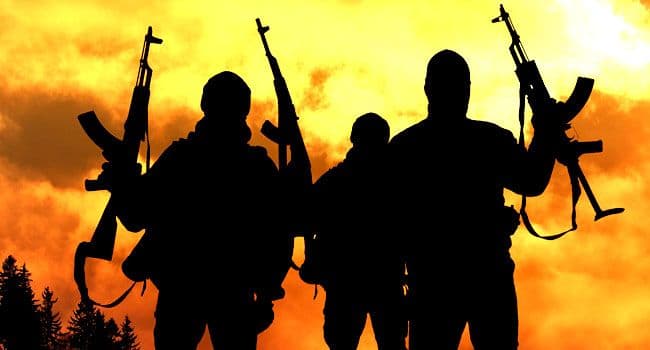
The Sahel region of Africa, which has become the “global epicentre of terrorism,” accounted for nearly half of all terrorism-related deaths for the third consecutive year in 2025, the Global Terrorism Report said on Thursday.
The index, compiled by the Institute for Economics and Peace think tank, has ranked 163 countries for 13 years according to the impact of “terrorism” based on indicators such as the number of attacks, deaths, injuries and hostages.
It defines terrorism as “the systematic threat or use of violence by non-state actors, whether for or in opposition to established authority.”
In 2024, more than half of the 7,555 deaths due to “terrorism” worldwide were recorded in the Sahel, a semi-arid belt stretching along the Sahara Desert’s southern rim from the Atlantic to the Red Sea.
The trend remained largely unchanged in 2025, with nearly half of the 5,582 deaths attributed to “terrorists” occurring in the Sahel, although the total number of victims in the region fell, the Australia-based think tank said.
“The Sahel has suffered a tenfold increase in terrorism fatalities since 2007”, when it accounted for only one percent of global terrorism-related deaths.
“The epicentre of terrorism has shifted from the Middle East and North Africa, into the Sahel region of sub-Saharan Africa,” the report said.
Burkina Faso was the most affected country in the world for two consecutive years, but was overtaken in 2025 by Pakistan.
“Deaths from terrorism in Pakistan are now at their highest level since 2013, with the country recording 1,139 terrorism deaths and 1,045 incidents in 2025,” the report said.
“This follows a sharp resurgence in terrorist activity driven in part by the Taliban’s return to power in Afghanistan in 2021,” the report said, also pointing to rising violence by the Pakistani Taliban movement and the Baloch Liberation Army (BLA), the most active separatist militant group.
More like this