



- Home
- /
- /
- Article
Obafemi Hamzat: Scrutinizing The Man Who May Become The Next Governor Of Lagos State
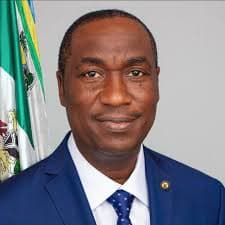
By AZUH ARINZE
In the ever-evolving chessboard of Lagos politics, succession conversations often begin long before election season officially arrives. And as the 2027 governorship race gradually enters public discourse, one name increasingly echoes through political circles, policy rooms, and grassroots conversations: Dr. Obafemi Kadri Hamzat.
Whether by design, destiny, or political calculation, Hamzat, born on September 19, 1964 and married to Oluremi, has emerged as perhaps the most visible, talked about and institutionally prepared figure in the conversation about who may occupy Alausa after Governor Babajide Sanwo-Olu. If Lagos chooses experience, technocratic competence, and continuity over political theatrics, then Hamzat may well be the man to beat.
Unlike many politicians whose public careers began in party structures, Hamzat’s rise was first forged in academia and professional excellence. An engineer by training, he earned a degree in Agricultural Engineering from the University of Ibadan, Oyo State before adding a master’s degree and later a doctorate in System Process Engineering from Cranefield University, England. His academic trajectory, no doubt, established him early as a serious-minded intellectual with a strong technical and analytical grounding.
And in a political environment where anti-intellectualism sometimes thrives, Hamzat has consistently projected the image of a cerebral leader – one more comfortable discussing policy frameworks, digital transformation, and governance systems than engaging in populist grandstanding and unnecessary controversies.
Before politics finally arrested him, Hamzat had built a reputation in engineering, systems management, and technology-driven administration. His expertise in technology and infrastructure made him a natural fit for public service at a time when Lagos was aggressively modernising its governance systems.
That technical competence became his entry point into the political establishment. He served as Commissioner for Science and Technology, later Special Adviser on Works. Across these roles, he developed a reputation as a policy wonk and implementation-driven administrator.
More like this