



- Home
- /
- /
- Article
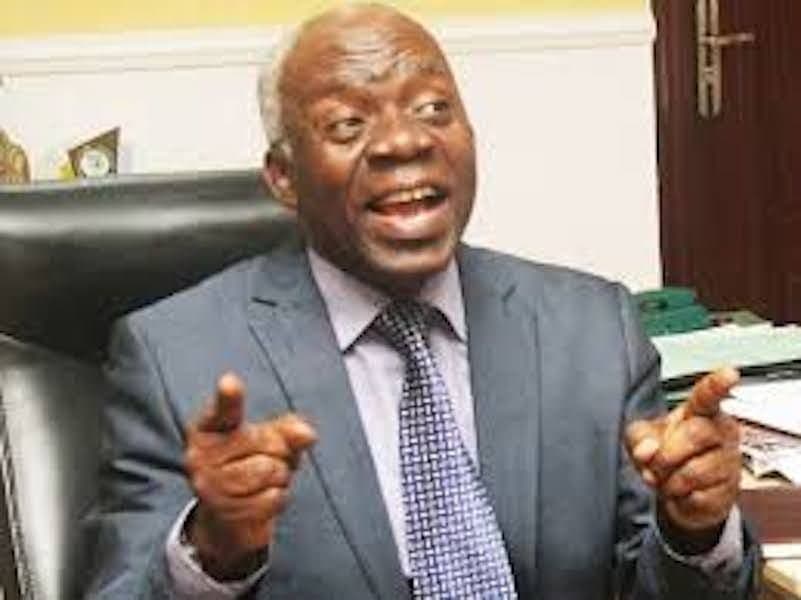
Falana
Human Rights Lawyer and Senior Advocate of Nigeria, Femi Falana, on Sunday demanded a probe into what he described as the diversion of a $3.4 bn loan from the International Monetary Fund.
Falana made this known in a statement he signed and made available to our correspondent.
Last week, the International Monetary Fund confirmed that Nigeria had fully repaid the $3.4 billion in COVID-19 financial support it received under the Rapid Financing Instrument. Although Nigeria’s principal balance stands at zero, scheduled charges, including net charges, basic interest, and administrative fees, amount to SDR 125.99 million. At the current exchange rate, this translates to approximately N275.28 billion.
“It is pertinent to recall that in the wake of the COVID-19 in 2030, Nigeria requested emergency assistance of about US$3.4 billion — equivalent to 100 percent of its quota from the International Monetary Fund to shore up the country’s economy and help businesses weather the storm of a deadly pandemic that disrupted global markets and plunged the world into a recession,” Falana said.
At the meeting of the IMF Executive Board held on April 28, 2020, the financial support of $3.4 billion was approved to provide critical support to shore up Nigeria’s health care sector and shield jobs and businesses from the shock of the COVID-19 crisis. In particular, the loan was designed to help alleviate the impact of the COVID-19 pandemic and the sharp fall in oil prices and also help limit the decline in international reserves.
Following the Executive Board’s discussion of Nigeria, Mr. Mitsuhiro Furusawa, Deputy Managing Director and Acting Chair, stated that, “The emergency financing under the RFI will provide much-needed liquidity support to respond to the urgent BOP needs. Additional assistance from development partners will be required to support the government’s efforts and close the large financing gap. The implementation of proper governance arrangements—including through the publication and independent audit of crisis-mitigating spending and procurement processes—is crucial to ensure emergency funds are used for their intended purposes.”(emphasis ours)
More like this